
Overview of our ISO Consultancy Services
Inzinc Consulting India Pvt. Ltd. is one of the leading ISO consultancy companies in India based in Bangalore. We provide Consultancy and training services for the following International Standards:
- ISO 9001:2026 Quality Management System - QMS
- ISO 14001:2026 Environmental Management System - EMS
- ISO 45001:2018 Occupational Health & Safety Management System - OH&S
- ISO 22000:2018 Food Safety Management System - FSMS
- ISO/IEC 27001:2022 Information Security Management System - ISMS
- ISO/IEC 42001:2023 Artificial Intelligence Management System - AIMS
- ISO 37001:2025 Anti-Bribery Management System - ABMS
- ISO 21001:2025 Educational Organizations Management System - EOMS
- ISO 22301:2019 Business Continuity Management System - BCMS
- ISO 13485:2016 Quality Management System for Medical Devices - QMSMD
Whether a small organization or a multinational corporate, our consulting solutions are designed to help implement the selected ISO standard effectively and within planned timelines. Our approach is practical so that implementation becomes part of the organization’s way of working rather than only a documentation activity.
ISO 9001 - Quality Management System
Inzinc Consulting India Pvt. Ltd. has a dedicated team of ISO consultants providing ISO 9001 consultancy services that include documentation support, implementation guidance, awareness training and Internal Auditor training.
To reach our ISO Consultants in Bangalore (Karnataka), Mumbai, Chennai, Pune, Delhi, Mysore, Hubli, Belgaum and other cities in India, please contact +91-9379917239 or email ic@inzinc.in
Training on ISO Quality Management Systems
Inzinc Consulting India Pvt. Ltd. provides training on ISO 9001:2026 through experienced trainers who explain the requirements in a simple and practical way.
ISO 9001 QUALITY MANAGEMENT SYSTEM (QMS) Maintenance Services
After certification, some organizations experience a reduction in focus on the practices established during implementation. We provide QMS maintenance support to help organizations sustain the system and continue obtaining benefits from it.
If you are presently certified to ISO 9001:2015, we can help you transition to ISO 9001:2026.
What does our consultation include?
We ensure that the ISO implementation is practical and supports effective organizational systems and continual improvement.
Our ISO Consultation includes :
- As-is Audit to analyse gaps
- ISO Awareness Training
- Formulation of Quality Policy and Quality Objectives
- Assistance in documented information such as manuals where maintained, procedures, work instructions, forms and formats
- Implementation guidance
- Internal Auditor Training
- Support in conducting Internal Audits and addressing correction and corrective action
- Management Review guidance
- Mock Audit
- Post Certification QMS Maintenance services
You can contact us at ic@inzinc.in for your enquiries for ISO Consultancy, ISO Certification Consultants and ISO Consultants Bangalore.
Introduction to ISO 9001
The ISO 9000 family relates to quality management systems and helps organizations establish systems to consistently meet customer requirements and applicable statutory and regulatory requirements relating to products and services.
The ISO 9000 family has evolved over the years to remain relevant to changing customer expectations, business environments, technologies and quality management practices.
The current edition is ISO 9001:2026. It was published on 16th September 2026 and replaces ISO 9001:2015.
ISO 9001 is a globally recognized management system standard that can be applied to both product and service organizations. It is a management system standard and not a product standard.
Benefits of ISO 9001
Revenue Growth
Improve credibility and support opportunities for new business.
Process Documentation
Document, understand and communicate company processes clearly.
Operational Efficiency
Improve efficiency, reduce waste and control operating costs.
Consistency
Improve consistency and reliability of operations.
Built-in Quality
Build quality into products and services through effective process control.
Gateway to International Business
Support participation in international markets and customer supply chains.
International Recognition
Gain recognition for implementing an internationally accepted quality management standard.
Global Best Practices
Align business processes with internationally accepted management practices.
Customer Satisfaction
Improve the ability to consistently meet customer requirements and enhance customer satisfaction.
Seven Quality Management Principles supporting ISO 9001:2026
- Customer focus
- Leadership
- Engagement of people
- Process approach
- Improvement
- Evidence based decision-making
- Relationship management
ISO 14001 – Environmental Management System
ISO 14001:2026 is the current international standard for Environmental Management Systems. It provides a framework for organizations to manage environmental responsibilities, fulfil applicable compliance obligations and continually improve environmental performance. ISO 14001:2026 replaces ISO 14001:2015.
What is Environmental Management System ?
An Environmental Management System (EMS) is the structured management of an organization’s environmental responsibilities through policies, objectives, processes, responsibilities, competence, resources, operational controls, monitoring and continual improvement.
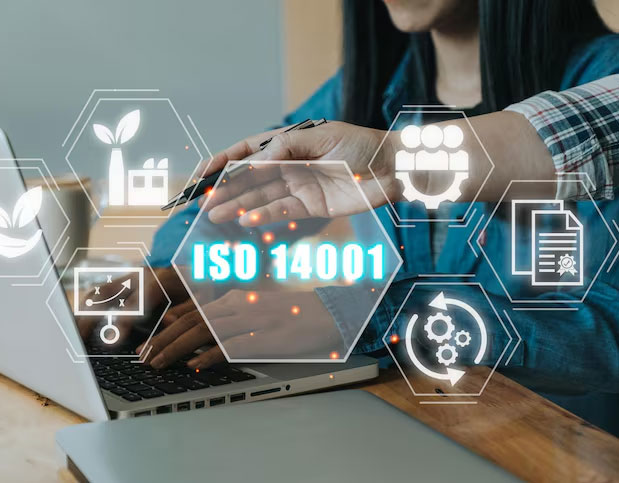
Benefits of ISO 14001
Efficiency
Provides a framework to minimize waste and improve efficient consumption of water, energy and raw materials.
Laws and Legislation
Provides a systematic approach for identifying and fulfilling applicable environmental compliance obligations.
Improve Transparency
Improves management transparency and supports integration with other management systems such as ISO 9001 and ISO 45001.
Reduce Costs
Helps reduce costs associated with emissions, discharges, waste handling, transport, disposal and inefficient resource use.
Improved staff
Improves environmental awareness and participation among employees.
Occupational Health & Safety Management System
Introduction
ISO 45001:2018 is the international standard that specifies requirements for an Occupational Health & Safety Management System (OH&S). Organizations implement ISO 45001 to manage occupational health and safety risks, protect workers and other persons under their control and meet applicable legal and other requirements.
What is Occupational Health and Safety Management System ?
An Occupational Health and Safety Management System helps an organization identify hazards, assess OH&S risks and opportunities, implement controls and continually improve occupational health and safety performance.
Benefits of ISO 45001
Reduces accidents and incidents
Supports elimination of hazards and reduction of OH&S risks.
Safety
Helps improve protection of workers, visitors and contractors.
Compliance
Supports fulfilment of applicable legal and other requirements.
Work performance
Improves employee confidence through systematic management of workplace health and safety risks.
Health and Safety
Supports a stronger organizational reputation in occupational health and safety.
ISO 22000 – Food Safety Management System and HACCP
Introduction to ISO 22000
Food safety requires identification and control of hazards that can arise throughout the food chain. ISO 22000:2018 specifies requirements for a Food Safety Management System (FSMS) and helps organizations manage food safety hazards systematically.
What is Food Safety Management System ?
A Food Safety Management System is the structured system used by an organization to identify, evaluate and control food safety hazards across relevant food-chain activities.

Benefits of ISO 22000
Food Safety
Helps ensure safer food through systematic hazard control.
Prevention of Food-borne Hazards
Helps prevent and control biological, chemical and physical food safety hazards.
Food brand
Supports confidence in food products and the organization’s food safety practices.
Customer confidence
Enhances customer confidence in food products manufactured, processed or handled by the organization.
Safety Risks & Hazards
Demonstrates organizational commitment to manage food safety risks and hazards.
Qualification
May help organizations qualify as suppliers within global food supply chains.
HACCP – Hazard Analysis Critical Control Point
HACCP is a preventive approach to food safety that identifies and controls significant biological, chemical and physical hazards rather than relying only on final product inspection.
Difference between HACCP and ISO 22000
HACCP focuses on identification and control of significant food safety hazards through Critical Control Points, while ISO 22000 provides a broader Food Safety Management System framework that includes management system requirements, communication, prerequisite programmes and hazard control.
HACCP operates on seven standards:
- Conduct hazard analysis
- Determine Critical Control Points (CCPs)
- Establish critical limits for each CCP
- Establish monitoring systems for each CCP
- Establish corrective actions
- Establish verification procedures
- Maintain appropriate documents and records
ISO/IEC 27001 - Information Security Management System (ISMS)
Introduction to ISO 27001
ISO/IEC 27001:2022 specifies requirements for establishing, implementing, maintaining and continually improving an Information Security Management System. Our ISO 27001 consultants provide professional consultancy support to help organizations establish a sound ISMS foundation.
What is an Information Security Management System?
An Information Security Management System (ISMS) is part of an organization’s management system and includes policies, objectives, processes, responsibilities and controls used to manage information security risks and protect information.
What is Information Security ?
Information security is the protection of information and associated assets against unauthorized access, use, disclosure, alteration, destruction or disruption, with the aim of maintaining confidentiality, integrity and availability.

What does our ISO 27001 Consulting services include?
ISO 27001 Gap Analysis
Conducting an ISMS gap analysis and reporting identified gaps.
ISO 27001 Documentation
Development and review of ISMS policies, procedures, forms, formats and other documented information required for implementation.
Statement of Applicability (SoA)
Guidance in determining applicable controls and preparation of the Statement of Applicability.
Risk Assessment
Guidance in information security risk assessment and risk treatment.
Information Security basics
ISO 27001 Awareness Training covering information security basics, ISO/IEC 27001 concepts and an overview of requirements.
Internal audit
ISO 27001 Internal Auditor Training and support for Internal Audits and Management Reviews.
ISO/IEC 27001:2022 Annex A Controls
ISO/IEC 27001:2022 contains 93 Annex A information security controls organized under four themes:
- Organizational controls
- People controls
- Physical controls
- Technological controls
ISO/IEC 27001:2022 Documented Information and Records
- ISMS Scope
- Information Security Policy
- Information Security Objectives
- Information Security Risk Assessment process and results
- Information Security Risk Treatment process and results
- Statement of Applicability
- Operational planning and control records
- Competence and training records
- Monitoring and measurement results
- Internal Audit programme and results
- Management Review results
- Nonconformity and corrective action records
- Other documented information necessary for applicable Annex A controls
Benefits of ISO 27001
Confidential data
Provides a systematic approach to protecting confidential information.
Secure information
Supports secure exchange and handling of information.
Risk Exposure
Helps reduce information security risk exposure.
Security Culture
Supports development of a stronger information security culture.
Customer and Stakeholder Confidence
Enhances confidence in how information security risks are managed.
Safeguard
Helps safeguard the organization, its information and associated assets.
ISO/IEC 42001:2023 – Artificial Intelligence Management System (AIMS)
Introduction to ISO/IEC 42001
ISO/IEC 42001:2023 is the international standard for establishing, implementing, maintaining and continually improving an Artificial Intelligence Management System. It is applicable to organizations that develop, provide or use products and services involving Artificial Intelligence. The standard provides a structured management framework for governing Artificial Intelligence responsibly and systematically throughout the AI system life cycle.
What is an Artificial Intelligence Management System?
An Artificial Intelligence Management System provides an organizational framework for AI policies, responsibilities, objectives, risk management practices and controls so that Artificial Intelligence is developed, provided and used responsibly.

What does our ISO/IEC 42001 Consulting include?
- AIMS Gap Assessment
- ISO/IEC 42001 Awareness Training
- Determination of AIMS scope and organizational context
- AI Policy and AIMS objectives
- AI Risk Assessment and Risk Treatment
- AI Impact Assessment
- Statement of Applicability
- Development of applicable AIMS policies, procedures and records
- Guidance for implementation of Annex A controls
- AIMS Internal Auditor Training
- Internal Audit support
- Management Review guidance
- Certification readiness assessment
Benefits of ISO 27001
Responsible AI
Provides a structured system for responsible development and use of Artificial Intelligence.
AI Risk Management
Helps identify, assess and treat risks associated with AI systems.
Transparency and Accountability
Supports defined responsibilities, appropriate transparency and accountability in AI-related activities.
Stakeholder Confidence
Helps strengthen confidence among customers, regulators, employees and other interested parties regarding the organization’s management of Artificial Intelligence.
AI Governance
Provides an organizational governance framework for managing AI systems throughout their life cycle.
Continual Improvement
Enables the organization to monitor, review and continually improve the effectiveness of its Artificial Intelligence Management System.
ISO 37001:2025 – Anti-Bribery Management System (ABMS)
Introduction to ISO 37001
ISO 37001:2025 is the international standard for Anti-Bribery Management Systems. It provides requirements and guidance to help organizations establish, implement, maintain, review and improve systems intended to prevent, detect and respond to bribery. The standard can be used by public, private and not-for-profit organizations of any size and can be implemented independently or integrated with other management systems.
What is an Anti-Bribery Management System?
An Anti-Bribery Management System helps an organization establish policies, responsibilities, due diligence processes, financial and non-financial controls, reporting mechanisms, investigation processes, training and monitoring to manage bribery risks.

What does our ISO 37001 Consulting include?
- Anti-Bribery Management System Gap Assessment
- ISO 37001 Awareness Training
- Anti-Bribery Policy and objectives
- Bribery Risk Assessment
- Due diligence framework
- Financial and non-financial controls
- Reporting and investigation processes
- Documentation and implementation guidance
- Internal Auditor Training
- Internal Audit support
- Management Review guidance
- Certification readiness assessment
Benefits of ISO 37001
Bribery Risk Management
Helps organizations systematically identify and manage bribery risks.
Prevention and Detection
Establishes controls intended to prevent, detect and appropriately respond to bribery.
Compliance
Supports the organization’s efforts to comply with applicable anti-bribery laws and commitments.
Business Confidence
Demonstrates that the organization has implemented recognized anti-bribery controls and governance practices.
Ethical Culture
Supports an organizational culture based on integrity and ethical business conduct.
Safeguard
Helps safeguard the organization, its information and associated assets.
ISO 21001:2025 – Educational Organizations Management System (EOMS)
Introduction to ISO 21001
ISO 21001:2025 is the international standard for management systems for educational organizations. It is designed for organizations that provide educational products and services and wish to improve their ability to consistently meet the needs of learners, other beneficiaries and relevant interested parties. The standard can be applied to schools, colleges, universities, training institutes, corporate learning functions and other organizations involved in education, training, learning or competence development.
What is an Educational Organizations Management System?
An Educational Organizations Management System provides a structured framework to establish objectives, manage educational processes, understand learner and beneficiary needs, evaluate performance and continually improve educational services and learning outcomes.

What does our ISO 21001 Consulting include?
- EOMS Gap Assessment
- ISO 21001 Awareness Training
- EOMS scope and context
- Policy and objectives
- Identification of learner and beneficiary requirements
- Process documentation
- Implementation guidance
- Performance monitoring
- Internal Auditor Training
- Internal Audit support
- Management Review guidance
- Certification readiness assessment
Benefits of ISO 21001
Learner Focus
Helps educational organizations understand and respond to learner and beneficiary needs.
Consistent Educational Services
Provides a structured system for planning and consistently delivering educational products and services.
Improved Educational Performance
Supports monitoring, evaluation and continual improvement of educational processes and outcomes.
Stakeholder Confidence
Enhances confidence among learners, parents, employers, regulators and other interested parties.
Inclusive and Accessible Education
Supports educational practices that consider accessibility, equity and diverse learner needs.
ISO 22301 Business Continuity Management System (BCMS)
Introduction to ISO 22301
ISO 22301 is the international standard that specifies requirements for a Business Continuity Management System. Business Continuity Management helps organizations reduce the impact of disruptions that could affect business operations. The current standard is ISO 22301:2019.

Benefits of ISO 22301
Business Disruption Risks
Identify and oversee present and potential risks that could disrupt the business.
Reduce Financial Impact
Minimize financial losses through risk management, emergency preparedness, response and contingency planning.
Continuity of Critical Activities
Support continuity of critical functions and resources during disruptions and contingencies.
Customer Confidence
Enhance customer confidence through demonstrated preparedness and business continuity capability.
Recovery Capability
Provides a system to improve recovery capability and recovery time.
Organizational Resilience
Reinforce organizational resilience through continued and reliable business operations.
Inzinc Consulting India can depute competent ISO 22301 Consultants in Bangalore, Chennai, Delhi, Mumbai, Kolkata and other parts of India. We can also support international consulting assignments.
ISO 13485 Quality Management System for Medical Devices (QMSMD):
Introduction to ISO 13485
ISO 13485:2016 specifies requirements for a Quality Management System for organizations involved in one or more stages of the medical device life cycle. It supports consistent processes and fulfilment of applicable regulatory requirements.

ISO 13485 Benefits:
Safety and performance
Supports robust processes intended to enhance the safety and performance of medical devices.
Regulatory Requirements
Helps establish systems supporting applicable regulatory requirements relating to medical devices.
Risk Management
Supports systematic management of risks.
Management Practices
Helps implement recognized quality management practices.
PDCA (Plan – Do – Check – Act)
Supports systematic planning, implementation, checking and improvement of processes.
Defects and errors
Helps minimize defects, errors and waste.
Analysing Performance and Correcting
Monitoring, measurement and audits provide mechanisms for evaluating performance and addressing shortfalls.
Objectives and process
Helps achieve business and process objectives more consistently.
ISO Certification Services
Inzinc Consulting India Pvt. Ltd. works with recognized ISO Certification Bodies and can support organizations seeking certification to ISO 9001:2026, ISO 14001:2026, ISO 45001:2018, ISO 22000:2018, ISO/IEC 27001:2022, ISO/IEC 42001:2023, ISO 37001:2025, ISO 21001:2025, ISO 22301:2019 and other applicable management system standards.
Our ISO Consultants in India can explain certification options, accreditation considerations and the certification process so that organizations can plan appropriate project and certification timelines.
We provide ISO consulting and certification support in Bangalore (Bengaluru), Mumbai, Chennai, New Delhi, Pune and other locations in India.
The PDCA Model (PDCA Cycle or the Deming Cycle)
Most of the ISO standards are based on the PDCA Cycle (Plan Do Check Act Methodology)
Most ISO management system standards use the PDCA Cycle – Plan, Do, Check and Act – as an important model for establishing and continually improving management systems.
The PDCA Cycle is a continual improvement methodology applied to business processes and management systems.
- PLAN : Establish the objectives and processes required to achieve intended results.
- DO : Implement the plan and operate the processes.
- CHECK : Monitor, measure and evaluate results against planned objectives and requirements.
- ACT : Take appropriate correction and corrective action where necessary and identify opportunities for continual improvement.
PDCA Cycle as a Tool for Continual Improvement
When PDCA is applied once, improvements may be achieved. Further improvements can then be planned and another cycle carried out. In this way, organizations can progressively improve their processes and management systems.
We are one of the fast growing ISO consultants in Bangalore. Whether a small organization or a multinational corporate, our consulting solutions help organizations implement selected ISO management system standards effectively and within planned timelines.
With a richly experienced and professional team, Inzinc Consulting India Pvt. Ltd. offers Management Consulting, Consulting on popular ISO Standards, Training, Auditing and related Services.